People
Grishin Lab Members
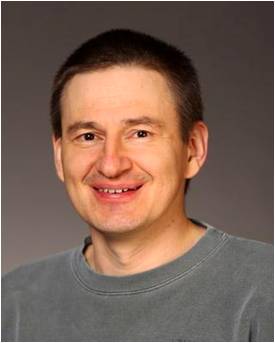
Born and educated in Russia, Nick received a Diplom (the Russian equivalent of a master's degree) in biochemistry from the Moscow State University (1993). His doctoral research in molecular biophysics was done with Margaret Phillips at the University of Texas Southwestern Medical Center (1998). After a postdoctoral year with Eugene Koonin at the National Institutes of Health, he joined the faculty at UT Southwestern. Nick is interested in most projects in the lab.
Saveliy Belkin Postdoc
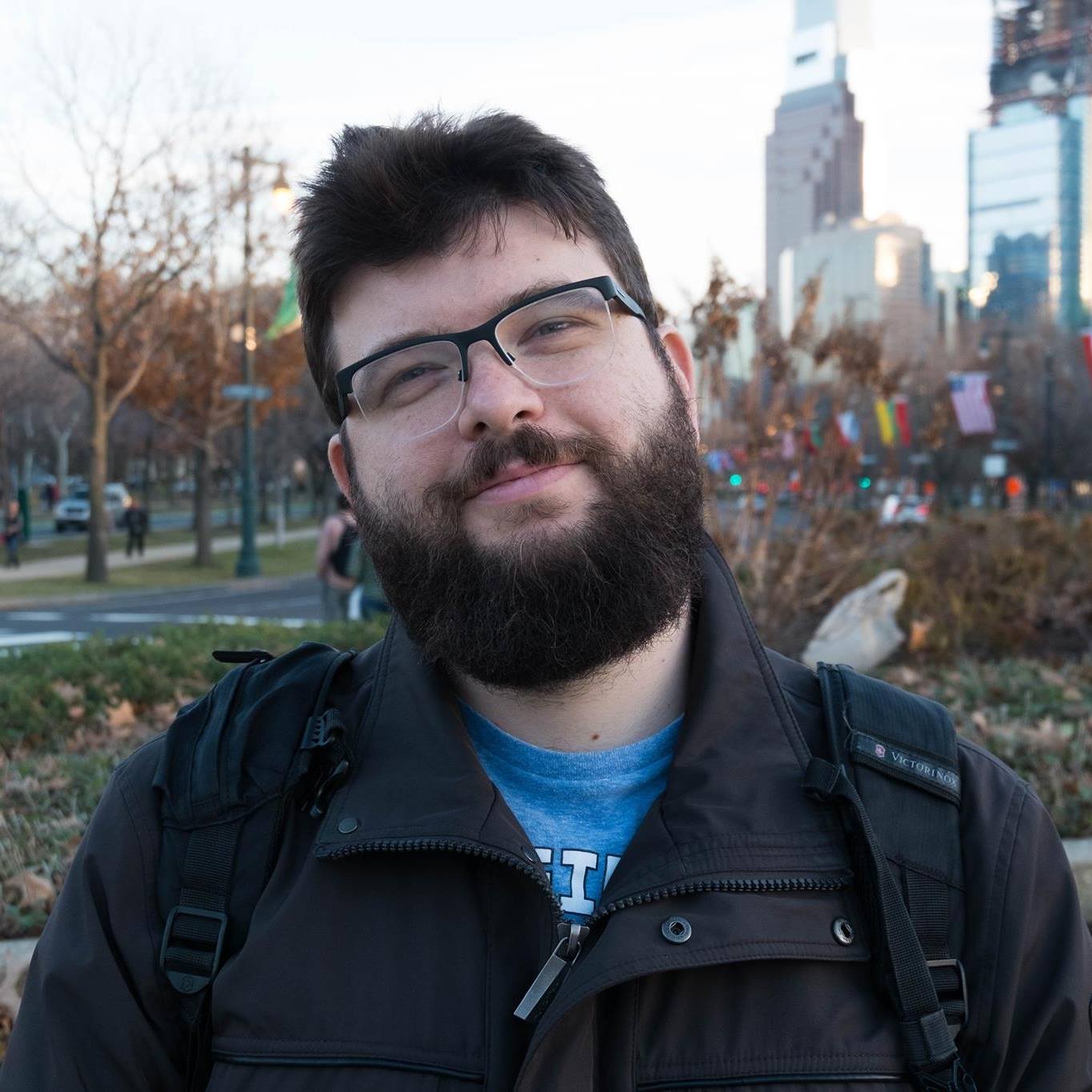
Saveliy received a Bachelor of Science, Pharmaceutical Science, May 2010 From Ohio State University, School of Pharmacy, and did undergraduate work on structural predictions for alternative splice proteins at the University of Michigan, Department of Computational Medicine and Bioinformatics. Saveliy recently graduated from the University of Kansas, Center of Computational Biology (March, 2019) with primary focus on Structural and Functional Characteristics of Protein-Protein Interfaces. He is interested in discerning domains among and within biological pathways, distinguishing them in terms of sequence/structure and evolution.
 Archana
Bhat Research Associate
Archana
Bhat Research Associate
Archana graduated with a MS degree in Bioinformatics from Virginia Commonwealth University in 2015. Before joining Grishin lab in 2018, she worked in a Microbiology and Immunology lab in Drexel University as a Bioinformatics analyst where she developed automated pipelines for analyzing microbiome sequencing and RNAseq data. In Grishin lab she has been involved in computationally studying protein sequences, structures and domain interactions.
Raquel
Bromberg Postdoc
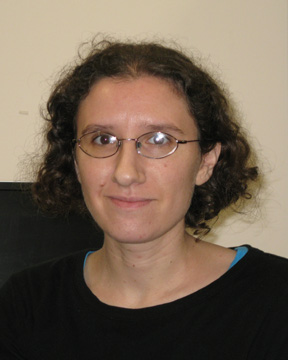
Raquel received her Masters in computer science from the University of Texas at Dallas. Her focus was in algorithms and her thesis was a statistical analysis of the pancake problem, a problem involving prefix reversals. She is now a student of the Division of Basic Sciences at UT Southwestern. She is interested in the evolution of proteins and is currently working on determining phylogenetic distances between prokaryotic organisms. Her work is a collaboration between the labs of Prof. Nick Grishin and Prof. Zbyszek Otwinowski.
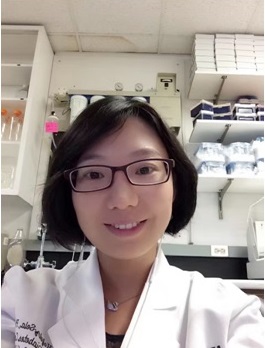 Ping Chen
Research Technician
Ping Chen
Research Technician
Ping Chen Received her Master’s degree of Biomedical Engineering from Southeast University, Nanjing, China. Now she works as a research technician in Grishin lab, and is working on the DNA extraction and library.
Lisa N. Kinch
Bioinformatics Scientist

Lisa received her Ph.D degree in Molecular Biophysics from the University of Texas Southwestern Medical Center at Dallas, where she studied enzymes of Trypanosoma polyamine biosynthetic pathways under the guidance of Margaret Phillips. She also carried out postdoctoral work in the lab of Elliott Ross examining the complex kinetics of G-protein signaling systems. Her experience relating enzyme structure to function attracted her to the bioinformatics field, where she developed an expertise in using sequence and structure analysis tools to classify proteins. Her current research interests include prediction of protein structure and function from sequence and exploration of fold changes in protein evolution.
 Yoonji Lee Bioinformatics Scientist
Yoonji majored in Pharmacy (B.S.) and received her Ph.D. in Molecular Modeling and Computer-Aided Drug Design at the Graduate School of Pharmaceutical Sciences, Ewha Womans University, Seoul, South Korea in 2013. After joining Grishin lab in 2017, her research is focused on the development of structure-based predictor of nuclear export signals. She also plays the role of a manual curator of the Evolutionary Classification of Protein Domains (ECOD) database.
Kirill Medvedev Postdoc
Kirill received his M.Sc. in Bioinformatics from Novosibirsk State University, Russia in 2010 and his Ph.D. in Mathematical Biology and Bioinformatics from the Institute of Cytology and Genetics, Russia in 2015. His thesis focused on molecular dynamics of extremophilic archaea proteins and understanding of their adaptation tools to extreme conditions. He joined the Grishin lab in 2016. His research projects are focused on functional and evolutionary analysis and classification of all known structures of Rossmann-like proteins and studying of intrinsically disordered regions and proteins in human proteome.
 Erik D. Nelson
Bioinformatics Scientist
Erik D. Nelson
Bioinformatics Scientist
Erik received his Ph. D. in condensed matter physics from the University of Massachusetts, Amherst. His research interests include protein folding kinetics, energy landscape theory and the influence of biological function requirements on protein self assembly. Erik is currently using explicit chain Langevin and Monte Carlo models to describe the effects of water and cooperative interactions on the folding of small, fast folding proteins. One of his goals is to develop a simple statistical model of protein free energy landscapes that can provide a quick and qualitatively accurate method of inference from kinetics and thermodynamics measurements.
Jimin Pei
Bioinformatics Scientist

Jimin Pei received his Ph.D. in biophysics from UT Southwestern Medical Center in 2004. His research is about the development and application of computational methods for analysis of biological sequences and structures. He has developed methods in multiple sequence alignment, protein design, functional site prediction, and evolutionary analysis. His computational work has facilitated annotation, classification, and structure/function prediction of protein families.
 Dustin Schaeffer Instructor
Dustin Schaeffer received his B.S. in molecular biology from the University of California, San Diego and his Ph.D. in biochemistry from the University of Washington, Seattle. He joined the Grishin lab in 2010. His thesis work focused on methods for high-throughput molecular dynamics simulations of protein folding and the study of the folding pathways of DNA/RNA-binding three-helix bundle homeodomains. His research focuses on the partition of protein structure and the quantitative classification of protein folds.
Jinhui Shen Research
Scientist
Jinhui Shen received his medical doctor degree and master of medical science degree from Wenzhou Medical College. He joined the Grishin lab in 2014 and has been working on genomic experiments and butterfly genome studies.
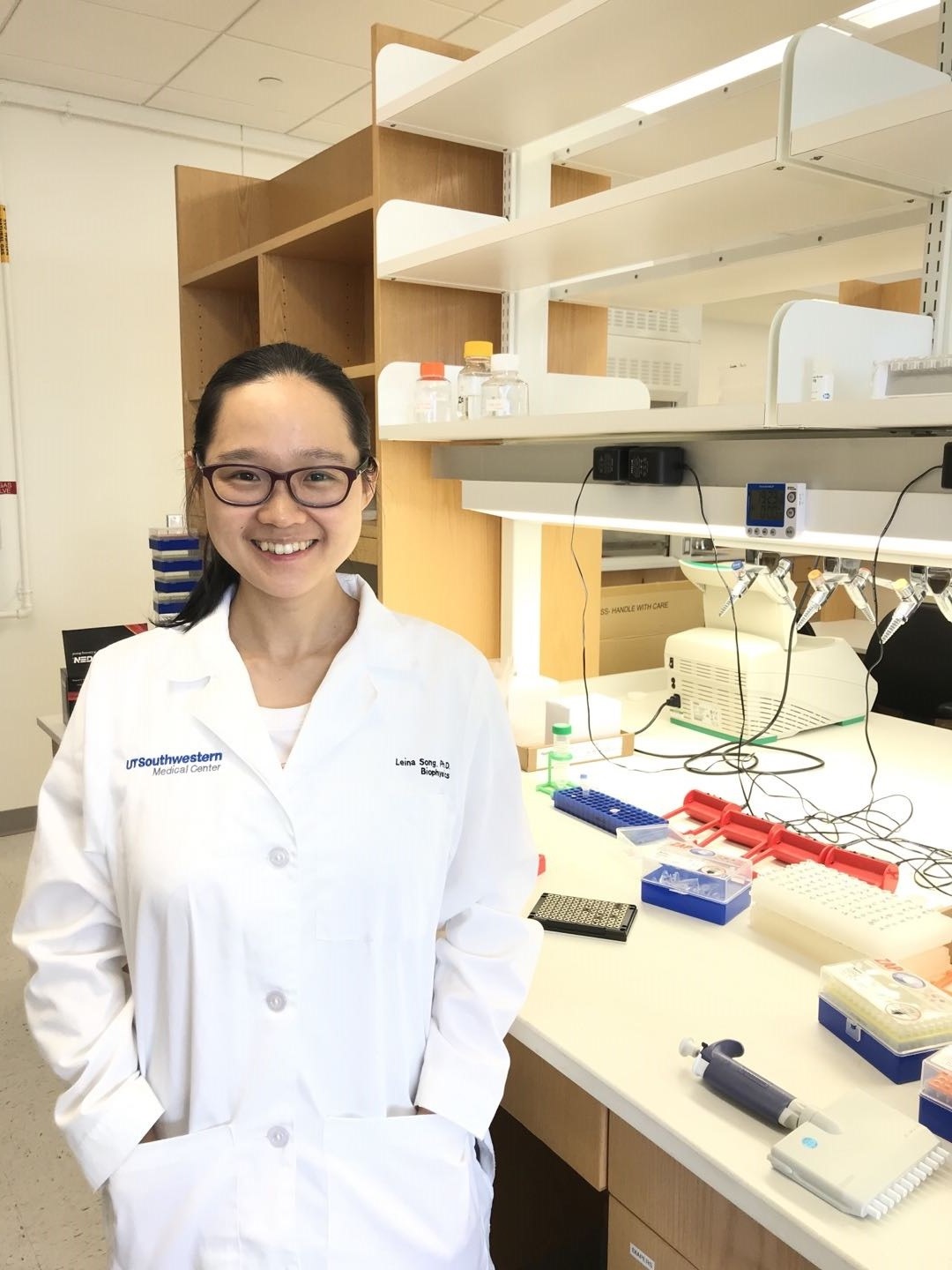 Leina Song Research Technician
Leina Song Received her Ph.D degree in Biochemistry and Molecular Biology from China Agricultural University. Now she works as a research technician in Grishin lab, mainly working on the genomic DNA extraction and library preparation.
Ming Tang
System Administrator

Ming hold a Bachelor's degree in Physics from Nankai University, Tianjin, China. In 1992 he received a Masters in Mechanics from Tianjin University. Between 1992 and 2000, Ming worked as a computer engineer. In the Grishin lab Ming makes sure all computers are in tip top shape, software is running and the databases are timely updated.
 Darui
Xu Postdoc
Darui
Xu Postdoc
Darui received her MS in computer science in 2002 and her Ph.D. in chemistry in 2007, both from Florida State University. Her graduate work focused on the electrostatics and molecular dynamics of nucleic acids. Now she is a postdoc in Yuh-Min Chook's lab collaborating with us on the analysis and prediction of nuclear export signals.
Jing Zhang
Graduate Student
Jing Zhang received bachelor’s degree in Biology, June 2013 from Wuhan University, China. She joined Grishin’s lab as graduate student in 2014 and is working on butterfly genomics.
Previous Lab Members
| Name | Position | Year |
|---|---|---|
| Jaime Guerrero | Rotation Student | 2019 |
| Xiaolong Cao | Postdoctoral Researcher | 2018-2019 |
| Wenlin Li | Graduate Student | 2010-2018 |
| Yuxing Liao | Graduate Student | 2010-2018 |
| Hua Cheng | Bioinformatics Scientist | 2001-2018 |
| Qian Cong | Graduate Student | 2009-2017 |
| Adam Haraburda | Graduate Student | 2011-2015 |
| Shuoyong Shi | Instructor | 2006-2015 |
| Jing Tong | Graduate Student | 2009-2015 |
| Jeremy Semeiks | Medical PhD Student | 2010-2015 |
| Sasha Safronova | Graduate Student | 2007-2015 |
| Ning Zhang | Rotation Student | 2013 |
| Fangzhou Zhao | Rotation Student | 2013 |
| Renkai Ji | Graduate Student | 2012-2013 |
| Ivan Huang | Undergraduate Intern | Summer 2011&2012 |
| Tao Wang | Rotation Student | 2012 |
| Bong-Hyun Kim | Postdoctoral Researcher | 2003-2012 |
| Chalam Chitturi | Postdoctoral Researcher | 2007-2011 |
| Adam Coster | Rotation Student | 2010 |
| Deng Mao | Rotation Student | 2010 |
| Dorothee Staber | Lab Manager | 2007-2010 |
| Ruslan I. Sadreyev | Bioinformatics Scientist | 2001-2010 |
| Indraneel Majumdar | Research Associate | 2001-2010 |
| Yong Wang | Graduate Student | 2005-2009 |
| Dhriti Pandya | Undergraduate Intern | Summer 2008 |
| Jamie O Wrabl | Bioinformatics Scientist | 2000-2008 |
| Daniel Parente | Undergraduate Intern | Summer 2007 |
| Yi Zhong | Scientific Programmer | 2003-2006 |
| Yuan Qi | Graduate Student | 2001-2006 |
| Anthony Yeh | Undergraduate Intern | Summer 2005 |
| Mingzhu Zheng | Graduate Student | 2004-2005 |
| Krzysztof Ginalski | Visiting Assistant Professor | 2004-2005 |
| Nathan Holladay | Medical PhD Student | 2003-2005 |
| Sara Cheek | Graduate Student | 2001-2005 |
| S. Sri Krishna | Postdoctoral Researcher | 2000-2005 |
| Wei Cai | Scientific Programmer | 2002-2004 |
| David Mittelman | Scientific Programmer | 2002-2002 |
| Shunming Fang | Research Associate | 2001-2002 |
| Shide Liang | Postdoctoral Researcher | 2000-2002 |
| Lakshmi Iyer | Postdoctoral Researcher | 2000-2001 |
| Xuguang Shao | Postdoctoral Researcher | 2000-2000 |